The three tools that turn a scene into an image — and how to notice them.
What the Camera Actually Does
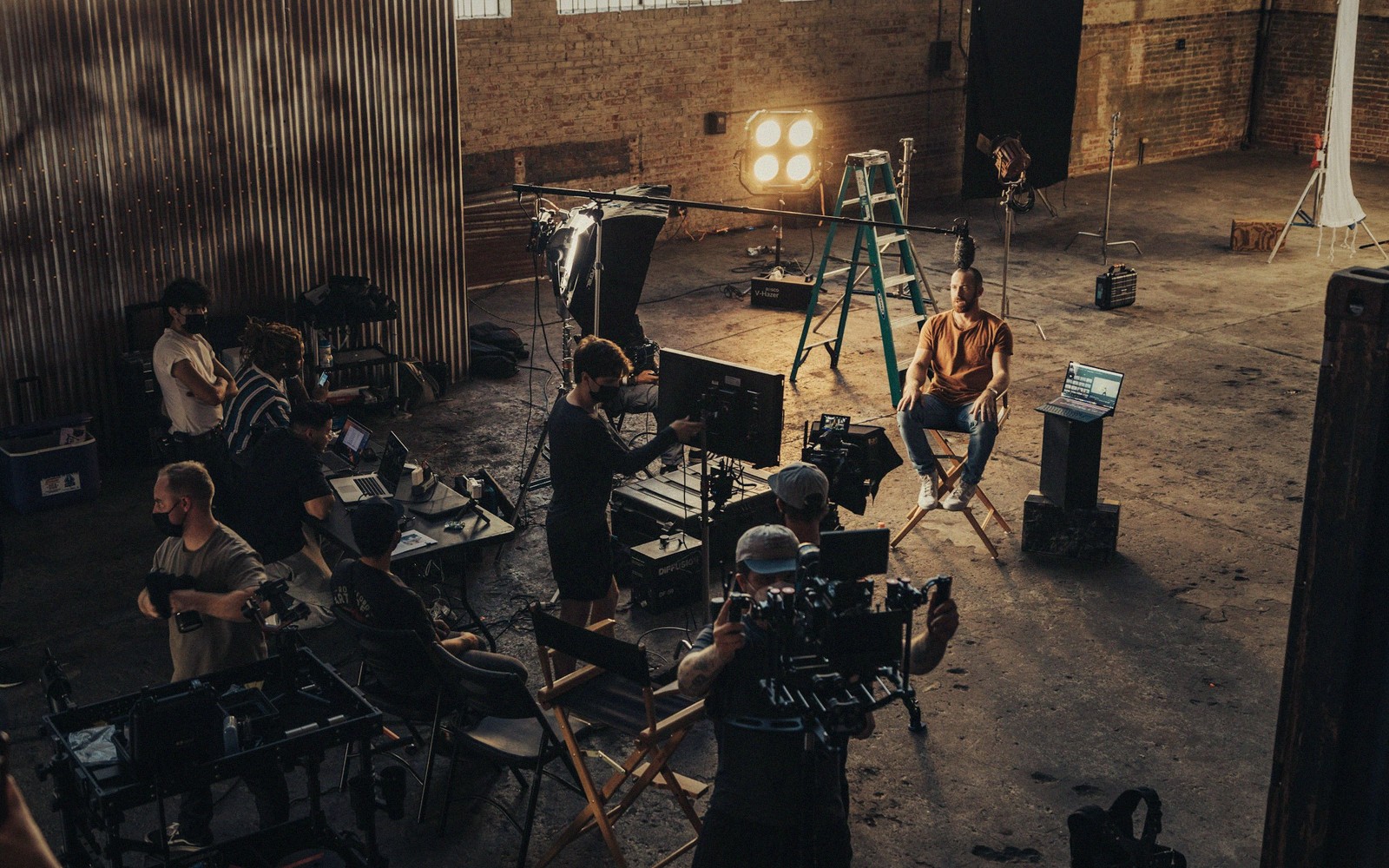
A script gives a scene its words; a director gives it its shape; but the cinematographer — the director of photography — gives it its skin. Every image you watch is built from three interlocking decisions: how to light it, which lens to use, and how, if at all, to move the camera. These are not technical footnotes. They are the emotional vocabulary of film.
Take light first. The direction, quality, and colour of a light source determine not just what is visible but what the image feels like. Hard, direct light — raking across a face at a sharp angle — carves shadow, creates drama, implies danger or moral ambiguity. Soft, diffused light flattens shadow and reads as warmth, safety, memory. The term chiaroscuro, borrowed from Renaissance painting, names that interplay of intense light and deep shadow; in cinema it arrived fully formed in German Expressionism in the 1920s and never entirely left. Even the neutrality of even, shadowless light is a choice — cool, clinical, institutional.
Colour temperature adds another layer. Firelight and tungsten sources push warm oranges and golds; overcast daylight is blue and neutral. Cinematographers manipulate that balance deliberately: a cold blue palette can register as alienation or grief; amber feels like intimacy or the irrecoverable past. When you notice a film holding relentlessly to one end of the colour scale, you are watching the DP shaping your emotional expectation before a single line of dialogue.
The Lens and the Move
The lens is the eye's geometry. A wide-angle lens (short focal length) takes in more of the scene and exaggerates the sense of depth — objects near the camera feel large and close, the background recedes fast. It suits environments that need to feel vast, oppressive, or distorted. A long telephoto lens (long focal length) compresses that depth: foreground and background seem to stack together, flattening space, sometimes making the world feel claustrophobic or surveilled — the camera watching from a distance without being noticed. A "normal" lens, close to 50mm on a standard frame, approximates roughly what the human eye perceives and can feel quietly invisible, which is itself a statement.
Then there is movement. A pan rotates the camera on a fixed axis — left to right, or back again — following action or revealing space. A tilt moves the axis up or down, often used to dwarf a character beneath a building or to survey a figure with judgement. A tracking shot moves the whole camera through space, which is a different sensation altogether: we feel embedded in the world rather than merely watching it. The art of editing deals in discontinuity and rhythm; camera movement, by contrast, insists on continuity, on duration, on the unbroken experience of being somewhere.
The dolly zoom — achieved by tracking the camera backward while simultaneously zooming in, or vice versa — keeps the subject the same size while the background warps, a dizzying expression of dissociation. Steadicam rigs, developed in the mid-1970s, allow handheld-looking shots with smooth, floating momentum — a form of movement that feels intimate and physically present at once.
How to Notice
None of this requires a technical vocabulary before you can see it. Watch for where the light comes from — and what it leaves in darkness. Ask whether the lens is making space feel deep or squashed. Notice whether the camera floats, charges, waits, or drifts. Every answer is a decision the filmmaker made. Once you start reading the image rather than just receiving it, films open up in a second dimension — the one running silently beneath the story.
- 1920sGerman Expressionism establishes chiaroscuro as a cinematic language
- mid-1970sSteadicam rig enters professional use
German Expressionism
1920s movement using distorted visuals and extreme shadow