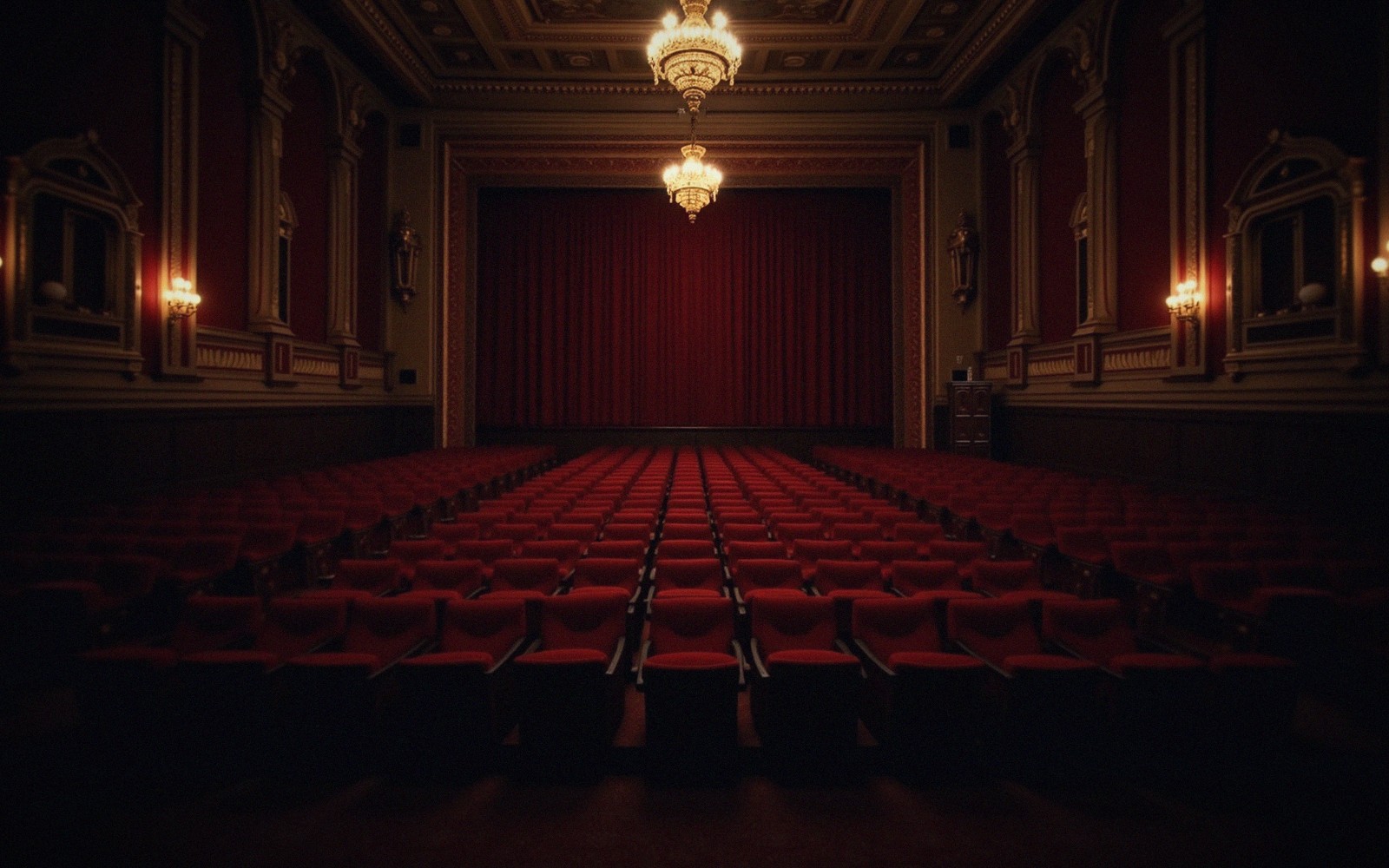
The pause is part of the picture — what the long film loses when it can no longer breathe.
The Missing Middle
There is a moment in Lawrence of Arabia — the roadhouse scene, roughly the halfway point — where the film simply stops. The intermission card appears. The overture's reprise swells. And in that silence between two halves, something extraordinary happens: you sit with what you've seen. The desert is still in your body. The film breathes, and so do you.
The intermission was never mere practicality, though it served that too. Epics of the classical era — Ben-Hur, Doctor Zhivago, 2001: A Space Odyssey — were roadshow attractions, ticketed like theatre, complete with printed programmes and reserved seats. The interval was structural, built into the rhythm of the experience the way an act break is built into a play. Directors placed them deliberately: at a peak of tension, or a turn in fortune, or a moment of hard-won stillness. The pause was cut as carefully as any other edit.
What it gave the audience was irreplaceable. Long-form storytelling asks something of the nervous system that shorter films do not, and the intermission functioned as a release valve — not an escape, but a deepening. You talked, or you didn't. You carried a scene into the lobby and let it settle. By the time the second half began, you were readier, not less engaged. The film had earned the interruption, and the interruption gave the film back to you renewed.
We've largely lost this. Home streaming has no use for the intermission; even theatrical screenings of long films — and there are plenty of them now, with running times nudging three and four hours — tend to push through without pause, as though stopping were an admission of failure. The result is a kind of endurance relationship with the material, an audience quietly negotiating its own discomfort, slipping out and back in, checking the time. The film continues; no one has said it may rest.
The intermission understood something about long-form cinema that we've grown too impatient to honour: that scale requires ceremony. A three-hour film is not a long short film — it is a different form, with different demands on attention and breath. The pause acknowledged that. It made the second act feel like a return rather than a continuation, a distinction that matters enormously when the story has the ambition to change you.
Some repertory cinemas still build intermissions into their roadshow screenings. When they do, the gratitude in the room is almost palpable.
- 1959Ben-Hur released as a roadshow attraction with intermission
- 1962Lawrence of Arabia roadshow release, intermission placed at the roadhouse scene
- 1965Doctor Zhivago roadshow release
- 19682001: A Space Odyssey roadshow release with intermission
Roadshow attraction
a prestige cinema release format, common 1950s–1970s, modelled on live theatre presentation