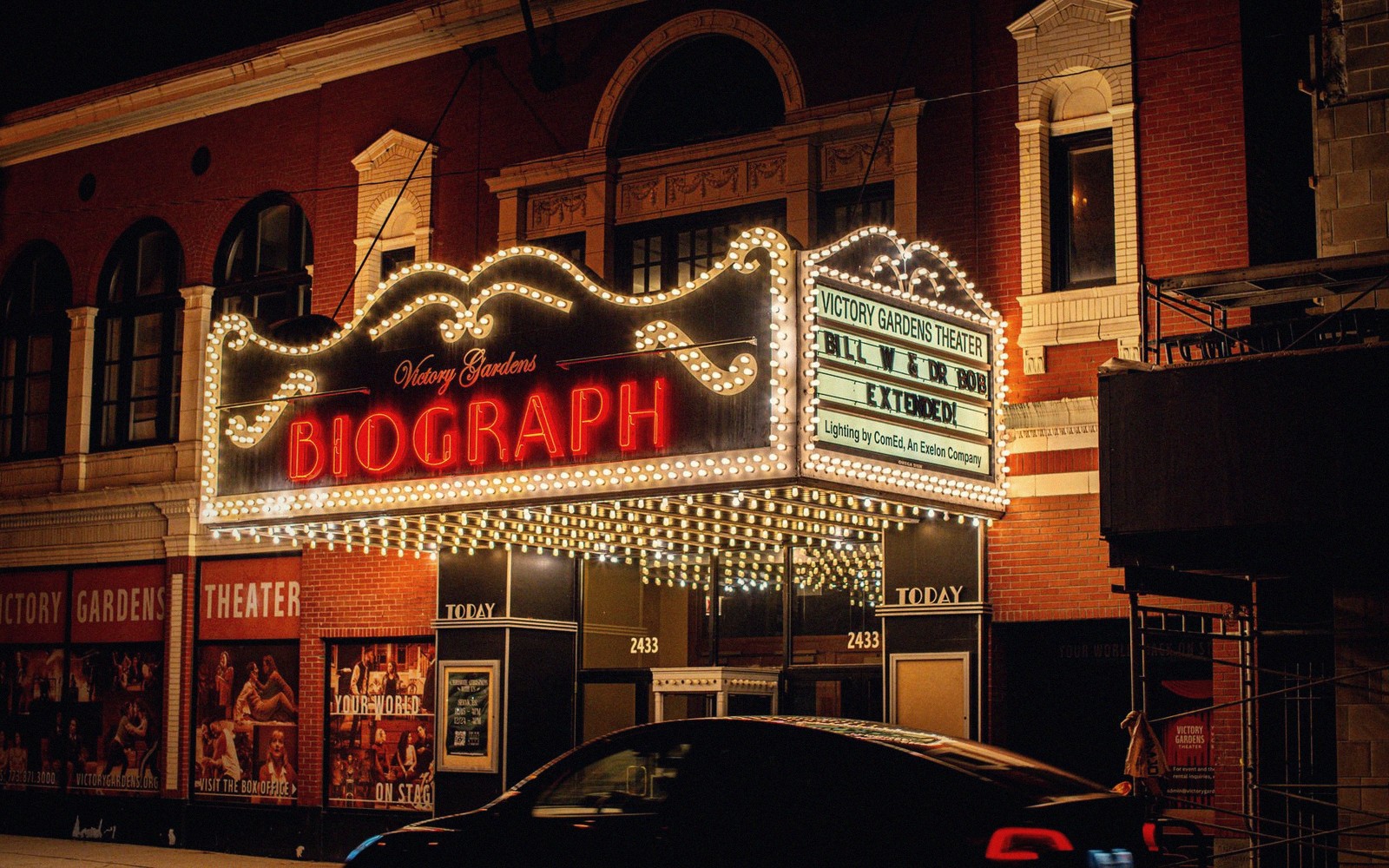
There is no streaming algorithm that knows what a film needs — but a good repertory programmer does.
What the Revival House Actually Is
A repertory cinema, or revival house, is a cinema that shows films it did not make, films you have already heard of, films that are sometimes older than the people projecting them. The word "repertory" borrows from theatre: a rotating company of works held in trust, brought back out when the moment is right. In practice it means a mid-week double bill of two 1950s Westerns, a weekend retrospective of a single director's output, a restored 35mm print of something you've only ever seen on a laptop at two in the morning.
These cinemas have existed as long as there has been a sense that films are worth returning to. The Cinémathèque Française, founded in Paris in 1936 by Henri Langlois and Georges Franju, was the cathedral version — a place where the New Wave directors taught themselves cinema by watching it obsessively, for free, in the dark. In the United States, art-house and campus revival theatres became the film schools for a generation of directors who couldn't afford film schools. The form has contracted and expanded with the economy several times over, but it has never vanished, because the need it serves is real.
Why the Room Changes the Film
A film watched at home is a film you are in charge of. You pause it, you rewind, you glance at your phone. A film watched in a repertory house is a film that is in charge of you. The room is dark, the image is large, the strangers around you are equally committed, and no one is pausing anything. That surrender is not a passive condition — it is the viewing state the medium was designed for.
Then there is the question of projection. Many revival houses maintain 35mm capability, and a good print in good condition carries photographic information — texture, grain structure, a particular warmth in the highlights — that a digital transfer, however careful, translates differently. The difference is not always dramatic, but it is often perceptible, and occasionally it is the difference between seeing a film and seeing what the cinematographer actually made. Beyond format, the repertory programme itself is a form of criticism. When a programmer pairs two films on a double bill, or builds a season around a theme or a movement — Italian neorealism, say, or the noir cycle — they are making an argument in the language of curation. The juxtaposition is the essay.
How to Use One
The single most useful thing a repertory cinema offers is context. Seeing a film surrounded by the other films it was in conversation with — chronologically, generically, politically — changes what you can see in it. A film that feels merely stylish seen alone can feel inevitable, even necessary, when seen as part of a movement. The isolating habit of on-demand viewing robs us of that. The revival house restores it, not as nostalgia but as method.
Go to things you haven't chosen for yourself. The repertory cinema's greatest gift to an active viewer is the programme you'd have skipped — the silent comedy you assumed was slow, the foreign-language film you almost didn't book because of the subtitles. The cinema made those choices for you, and it made them from knowledge and love. Trust that.
Find the Q&A nights, the introduced screenings, the post-show discussions in the bar. These are not extras bolted on to the main event; they are part of the repertory experience — the human transmission of film culture, person to person, in a room that smells faintly of old carpet and good coffee. Streaming has many things. It doesn't have that.
Henri Langlois
co-founder of the Cinémathèque Française; legendary archivist and champion of cinema
Georges Franju
co-founder of the Cinémathèque Française; later a filmmaker in his own right
Cinémathèque Française
Paris film archive and repertory institution, founded 1936