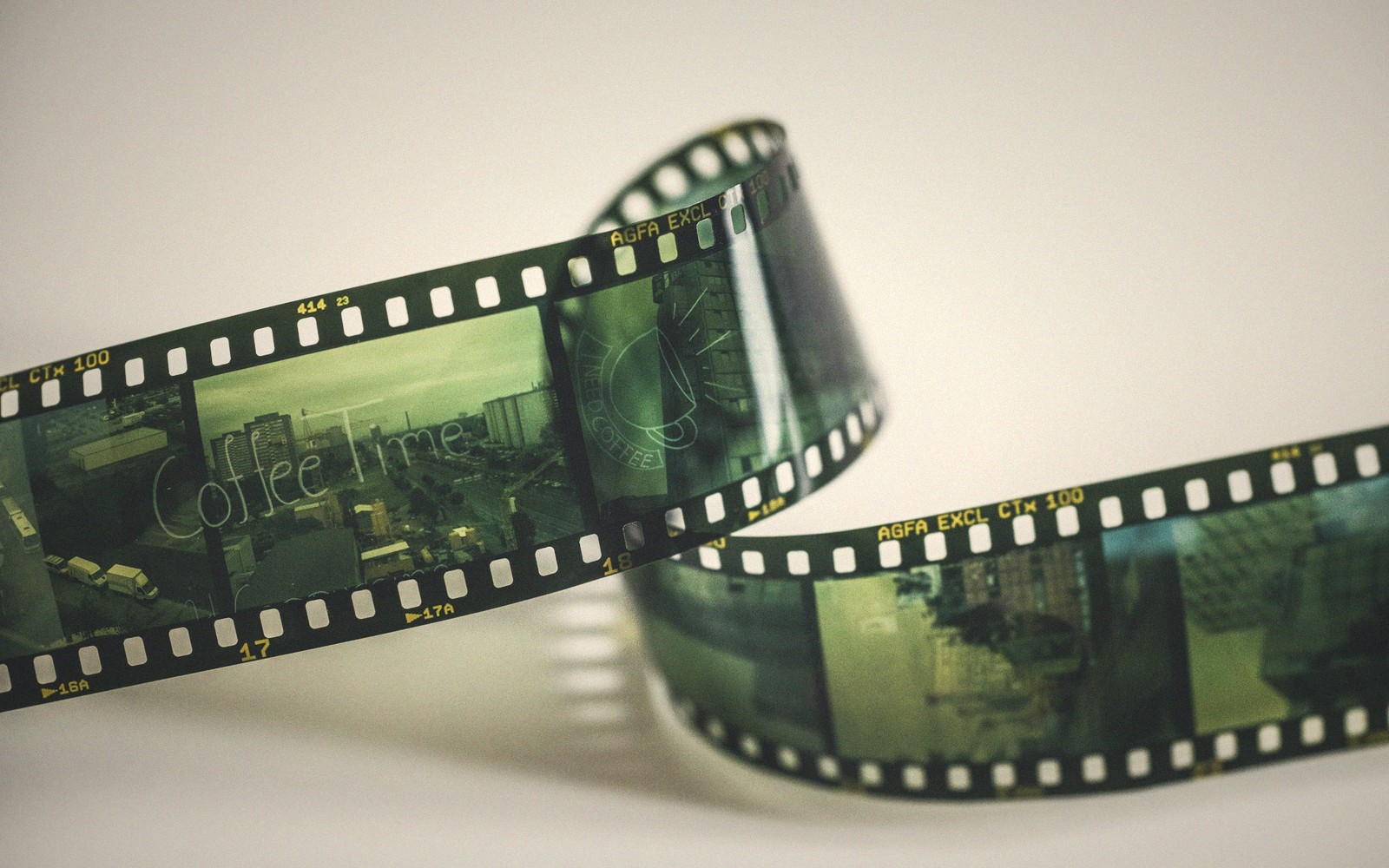
Wide, medium, close — the sentence structure of the moving image.
Reading the Frame
Every shot in a film is a word in a sentence, and like words, shots carry different weights. Learn to recognise three basic types and you've acquired a working grammar for reading almost anything that moves on screen.
Thewide shot — sometimes called an establishing shot — places a character inside a world. It tells you where before it tells you who, setting scale, geography and mood in a single composition. When David Lean held Lawrence against the immensity of the Arabian desert, or when the camera in a western pulls back to reveal how small a lone rider is against the sky, the wide shot is doing philosophical work: it's arguing that the world is larger than any individual in it.
Themedium shot is conversation. Framing roughly from the waist up, it's the workhorse of cinema — the register of social life, negotiation, interaction. Two people at a table, an actor reaching for something, a body that is neither lost in landscape nor consumed by emotion. It shows us what people do and how they do it together.
Theclose-up is where the film comes inside you. Cutting to a face — an eye, a hand, a half-open door — the camera stops describing and starts insisting. Audiences don't watch a close-up so much as inhabit it. The Soviet directors of the 1920s understood this as pure ideology: montage theorists like Sergei Eisenstein showed that cutting between close shots of objects and faces could produce meaning that existed in neither image alone. The close-up is still doing that work, even in a contemporary thriller.
What matters as much as any single shot is the sequence: the way a director moves through wide, medium, and close. A cut from a sweeping landscape to a sudden extreme close-up of a frightened eye creates shock. A slow drift inward — wide to medium to close — builds dread or intimacy. Reverse that movement and the effect reverses too, releasing a character back into the world, or stranding them in it.
The grammar isn't a formula. Directors break these patterns deliberately, and the break itself creates meaning. But you can't hear a deviation from a rule you don't know. Start noticing shot scale in the next film you watch — where the camera chooses to stand, how close it dares to come — and the film will start speaking to you in a new register entirely.
| Shot | What it claims |
|---|---|
| Extreme wide | Places a figure in the world; the world dominates. |
| Wide / long | The whole body and its space. |
| Medium | Waist up — the shot of conversation. |
| Close-up | The face, the emotion, the detail that matters. |
| Extreme close-up | An eye, a hand, an object — pure emphasis. |
| Insert | A cutaway to a detail the story needs you to see. |
Sergei Eisenstein
Soviet director and theorist; foundational figure in montage theory
David Lean
British director known for epic wide-frame landscape compositions