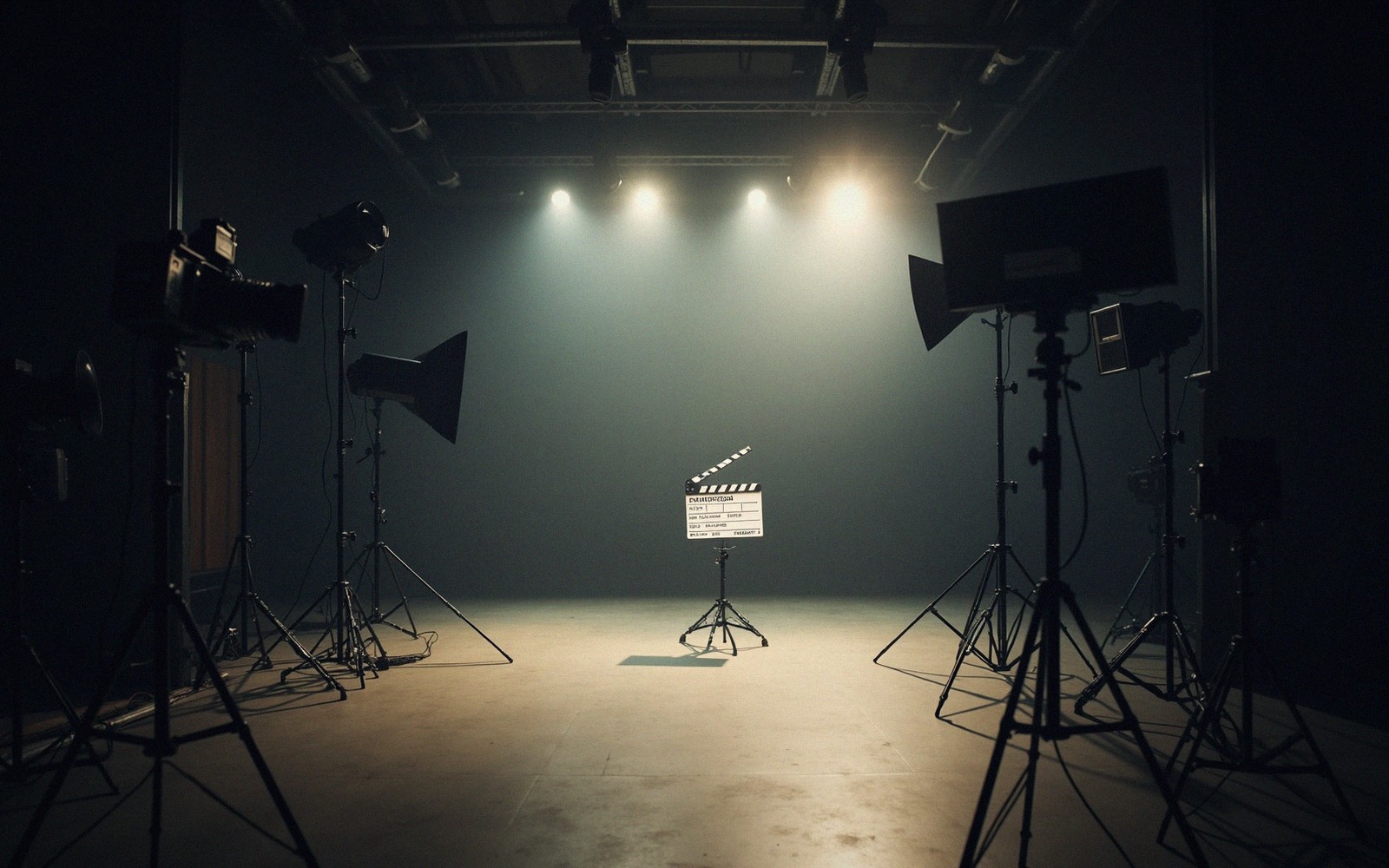
The Frame Is Never Innocent
Here is a useful habit to form: the moment a new scene begins, pause — mentally, if not literally — and ask what you are looking at before you ask what is happening. The room, the light, the distance between two people. The colour of a wall. Whether the ceiling is visible. Whether the shot feels cramped or airy. None of this is accidental. Every element placed within the frame, or withheld from it, has been chosen. That act of choosing has a name borrowed from theatre: mise-en-scène, French for "putting into the scene." In practice it means everything the camera finds when it looks — and learning to read it is one of the genuine pleasures film literacy unlocks.
Start with space. A director who shoots characters at arm's length in a wide frame is making a very different claim about those characters than one who keeps them at close range, cheek to cheek. Wide shots can isolate, dignify, dwarf or liberate, depending on what surrounds the figure. Tight compositions press in and implicate. The distance between the lens and its subject, and the distance between characters within the frame, both carry meaning. So does the frame's internal geometry — whether figures are centred or pushed to the edge, whether they are level with the camera or shot from above or below. A low angle can make a character loom with authority; a high one can make the same person look diminished, even surveilled. These are not exotic techniques reserved for art cinema; they operate in every film you have ever seen.
Decoding the Visible Choices
Light is the most emotionally direct tool in the frame. Hard, high-contrast shadows announce menace or moral ambiguity — the vocabulary that made film noir so instantly readable as a world of danger. Soft, diffused illumination can feel safe, domestic, nostalgic, or, pushed too far into the saccharine, dishonest. Where the light falls and where it doesn't is compositional argument: what the cinematographer illuminates, the audience's eye trusts. What sits in shadow is held in reserve, or in doubt.
Cinema is not illustrated dialogue — the best scenes argue in two registers at once.
Colour is equally expressive. A scene drained to near-monochrome communicates something different from one saturated with warm amber, even if the script's words are identical. Production design — the furniture, the props, the wardrobe — extends that argument into three dimensions. A character dressed in a shade that echoes the wallpaper behind them is being, quite literally, absorbed by their environment. A character whose clothing conflicts with everything around them announces their discomfort or their difference without a single line of dialogue. These choices work on viewers subliminally; naming them makes them conscious.
| Hard, high-contrast light | Soft, diffused light |
|---|---|
| Menace and moral ambiguity — the vocabulary noir made instantly readable | Safety, domesticity, nostalgia — pushed too far, dishonesty |
| What sits in shadow is held in reserve, or in doubt | Everything is offered to the eye at once |
| The frame argues | The frame reassures |
Then there is staging — where actors are placed and how they move within the space. In a scene with two people, watch who stands and who sits, who occupies the frame's dominant side, who is forced to look up. Power and vulnerability are constantly being mapped in space. When a character crosses from one side of the frame to the other, they are often crossing some interior threshold too. And when the camera itself moves — tracking forward as a decision hardens, pulling back as a character feels the weight of isolation — the movement becomes part of the scene's emotional argument.
Learning to See the Whole Frame
Reading mise-en-scène is not about decoding secret symbols. It is about training yourself to perceive the full rectangle of the image, not just the face at its centre. A useful exercise: watch one scene from a film you know well with the sound off. Stripped of dialogue and score, the visual grammar becomes legible in a new way. You will notice how much storytelling happens in the periphery — a door left open behind a character, an object in the foreground that will matter later, a shadow that enters the room before the person it belongs to.
The periphery is where directors hide their setups — check the corners of the frame first; the centre will take care of itself.
This is what separates active watching from passive consumption. Cinema is not illustrated dialogue. The best scenes work in two registers simultaneously: what the characters say and do, and what the frame itself argues about them. Often those two registers are in agreement; sometimes they are in pointed tension, and that tension is where the real meaning lives.
You do not need technical vocabulary to begin. You need only to look at the whole frame, to notice when something makes you feel something before you understand why, and then to ask: what did the filmmaker put here to make me feel this? That question, asked quietly and habitually, is the beginning of reading cinema rather than merely watching it. And once you start, you cannot easily stop.