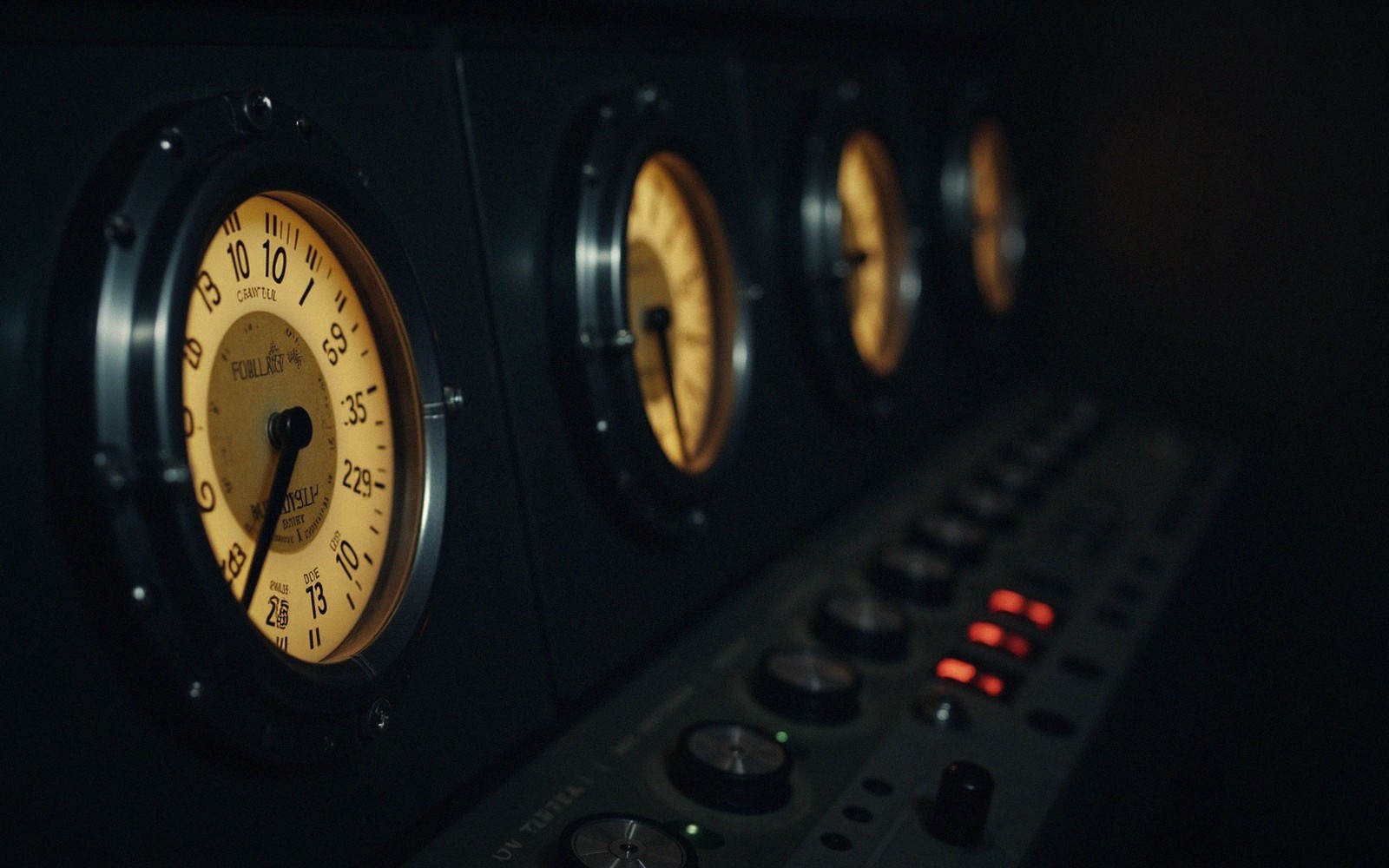
Not just spaceships — the genre that asks what we are by imagining what we could be.
The Oldest Question in a New Costume
Science fiction is cinema's great thought experiment. Strip away the production design — the starships, the androids, the cities half-drowned or half-vaporized — and what remains is philosophy wearing genre clothes. The best of it has always been less interested in the future than in the present, using speculative distance to ask questions that feel too large, or too raw, to ask directly.
The genre arrived in cinema almost at cinema's birth. Georges Méliès sent a bullet-shaped rocket into the moon's eye in 1902, and in that single image declared the form's essential promise: the impossible made visible, the imagination given weight and light. When Fritz Lang built Metropolis in 1927, he was not predicting what cities would look like; he was diagnosing what industrial society was doing to the people inside it. The technology was the metaphor.
That remains science fiction's key mechanism. The alien invasion, read plainly, is a creature feature; read carefully, it is almost always anxiety wearing a rubber suit — about the foreign, the epidemic, the loss of individual identity. The artificial human asks where consciousness begins and whether it can be owned. The colony ship asks who gets to survive, and who decides. Dystopia asks what we will trade for safety, and who profits from the trade.
This is why the genre has attracted serious filmmakers across every era. It offers what literary critics call the novum — the single speculative deviation from known reality from which everything else must follow rigorously. That discipline, paradoxically, is liberating: world-building demands coherent internal logic, and coherent logic produces drama that feels inevitable. When a science-fiction premise is working, the story could not have gone any other way.
Which is also why the genre fails so spectacularly when it abandons the idea for the spectacle. Effects without consequences, scale without stakes — these are not science fiction but theme-park rides with better marketing. The films that endure do so because the cinematography serves a vision, and the vision is asking something real.
The spaceship, at its best, is a vehicle for inquiry. The question it carries is always the same: what are we, and what might we become?
- 1902Méliès' A Trip to the Moon establishes sci-fi as a cinematic form
- 1927Lang's Metropolis sets the template for socially critical science fiction
Georges Méliès
filmmaker
French pioneer who made A Trip to the Moon (1902)
Fritz Lang
filmmaker
German director of Metropolis (1927)